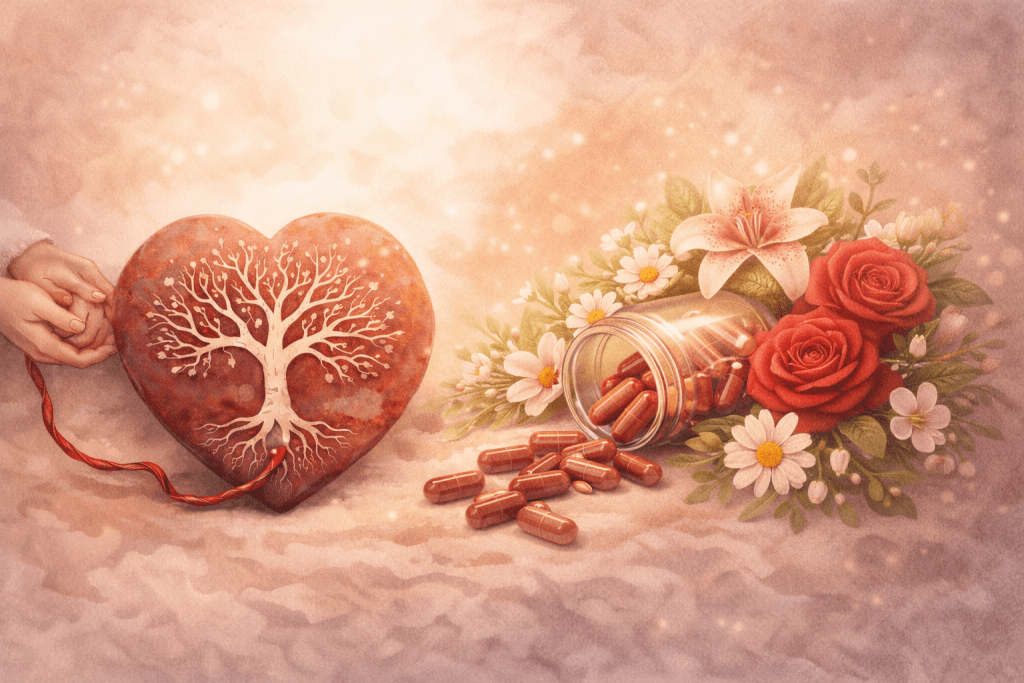
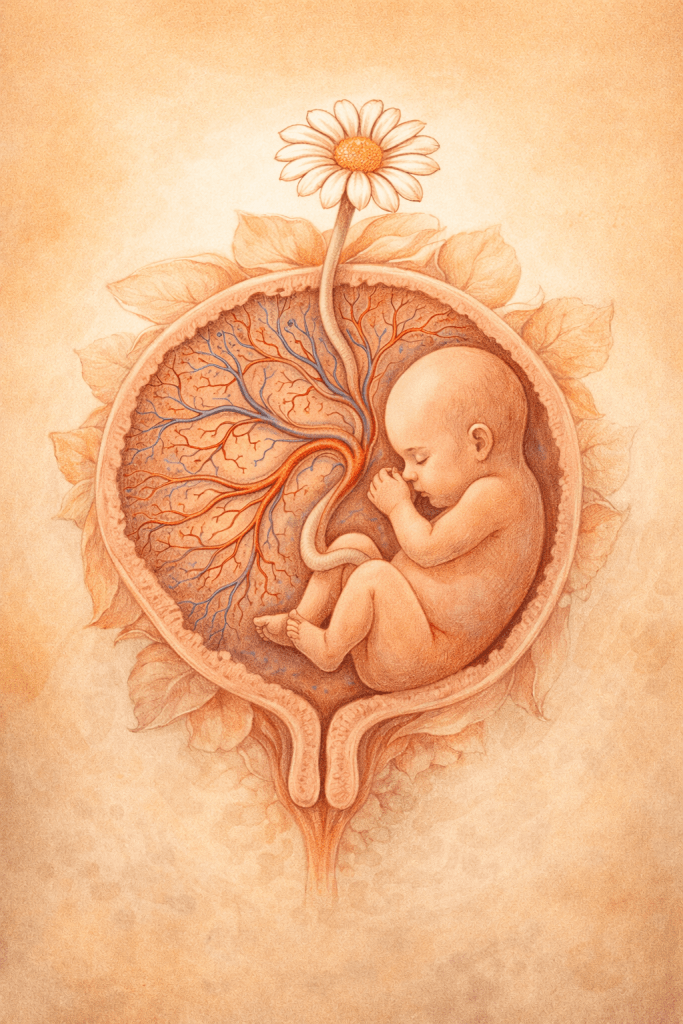
During pregnancy, one extraordinary organ quietly does the work of sustaining life: the placenta.
It grows with your baby, connects two bodies without ever mixing their blood, and acts as a bridge of oxygen, nutrients, hormones, and protection for nine months.
After birth, once its role is complete, many cultures have treated the placenta with deep respect—burying it, planting it, using it in rituals, or preserving it in various forms. In recent years, placenta encapsulation has re-emerged as a way of honouring this organ while supporting the mother’s postpartum recovery.
This page is here to help you understand what placenta encapsulation is, who it may be for, how it’s prepared, and how to approach it with clarity, safety, and informed choice. I offer my services in Barcelona.
The Placenta: A Temporary Organ With a Powerful Role
The placenta is the first home your baby knows.
Formed from both maternal and fetal tissue, it:
- Delivers oxygen and nutrients to the baby
- Removes waste from the baby’s bloodstream
- Produces key hormones that sustain pregnancy and prepare the body for birth and lactation
- Acts as an immune filter, passing protective antibodies to the baby
In many ways, the placenta is the unsung hero of pregnancy—doing immense work, then disappearing quietly after birth.
For some mothers, the question arises: Could this organ that gave so much to my baby also give something back to me?
What Is Placenta Encapsulation?
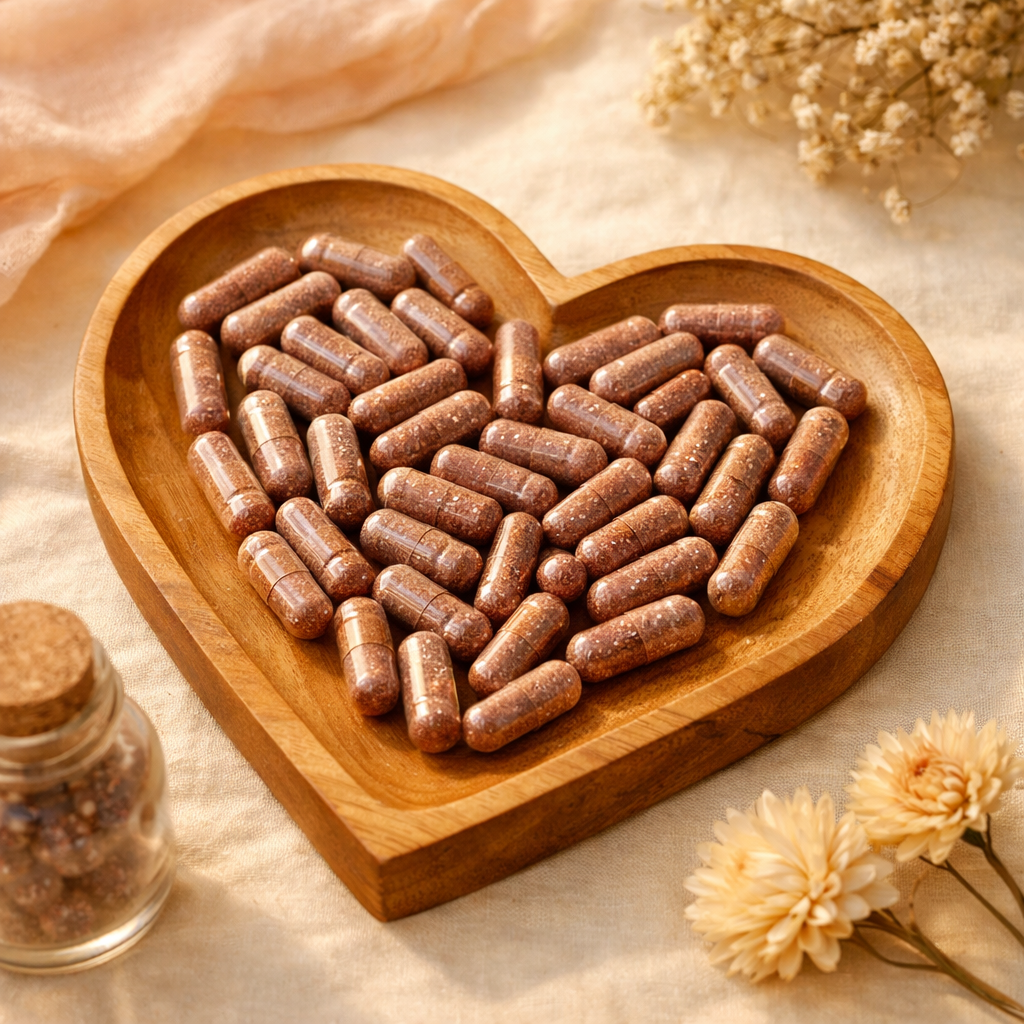
Placenta encapsulation is the practice of preparing the placenta after birth and transforming it into easy-to-take capsules.
The most common preparation methods include:
- Dehydration and encapsulation (with or without a prior steaming step)
- Tinctures, made from a small portion of the placenta for long-term use
- Keepsakes, such as prints or umbilical cord mementos (optional additions)
Encapsulation allows mothers to ingest their placenta gradually during the postpartum weeks, without taste or smell, in a form that fits easily into daily care.
Why Some Mothers Choose Placenta Encapsulation
Many mothers choose placenta encapsulation as a way to support their postpartum transition—physically, hormonally, and emotionally—during a time of profound change.
Again and again, mothers describe experiences such as:
- More sustained energy during the early postpartum weeks
- Greater emotional steadiness and mood balance
- A gentler transition through the hormonal shift after birth
- Feeling more supported and resourced during recovery
- A sense of continuity and grounding after pregnancy
These experiences are deeply connected to the nature of the placenta itself.
The placenta is not only a life-sustaining organ for the baby—it is also a rich, biologically active organ that supports the mother throughout pregnancy and into the postpartum period. It naturally contains a wide spectrum of nutrients, minerals, and hormones that play key roles during this time, including:
- Iron, which helps replenish blood loss after birth and supports vitality and energy
- B vitamins, including vitamin B6, essential for nervous system function, emotional balance, and energy metabolism
- Trace minerals such as zinc and selenium, which support immune function and tissue repair
- Progesterone and estrogen, hormones that drop abruptly after birth and are closely linked to mood and emotional regulation
- Oxytocin, often called the bonding hormone, associated with connection, calm, and emotional well-being
- Prolactin, which supports lactation and the maternal caregiving response
- Corticotropin-releasing hormone (CRH), involved in stress regulation and emotional resilience
During the postpartum period, the mother’s body is recalibrating on every level—hormones shift rapidly, nutrient stores may be depleted, and the emotional landscape can feel tender and raw. For many women, placenta encapsulation becomes a way of offering nourishment back to themselves at a moment when they are giving so much.
It’s important to name this clearly and honestly:
Placenta encapsulation is not a medical treatment.
Scientific research on its benefits remains limited.
This does not negate the experiences of mothers, nor does it diminish the biological reality of the placenta. Rather, it reflects how little modern medicine has invested in studying the postpartum period, the placenta, and maternal recovery—despite their central importance to family and societal health.
Much of our understanding today comes from:
- Ancestral and traditional practices across cultures
- Observations within mammalian biology
- The lived experiences of thousands of mothers, shared across generations
For many, this weaving of biology, tradition, and embodied experience feels deeply supportive and aligned. For others, it does not resonate—and both choices are valid.ology, tradition, and intuition feels deeply supportive. For others, it simply doesn’t resonate—and both paths are valid.
A Note on Science, Evidence, and Choice
You may hear placenta encapsulation described as:
- “Not scientifically proven”
- “A placebo”
- “Ancient wisdom”
- “Alternative postpartum care”
The truth is more nuanced.
Placenta encapsulation has not been extensively studied, largely because placentas are rarely prioritised in research once a healthy birth has occurred. At the same time, absence of large-scale studies does not equal absence of value.
Many aspects of postpartum care that mothers rely on today—rest, skin-to-skin, emotional containment—were once dismissed or ignored by medical models.
This is why I approach placenta encapsulation with:
- Transparency
- Respect for personal discernment
- Clear boundaries around claims
If you feel drawn to it, you deserve accurate information and a practitioner who handles your placenta with care and integrity.
Who Placenta Encapsulation May Be For
Placenta encapsulation may be a good fit if you:
- Feel curious or intuitively drawn to the practice
- Want gentle, non-pharmaceutical support during postpartum
- Value holistic or traditional approaches to recovery
- Appreciate ritual, symbolism, and continuity after pregnancy
- Want to honour your placenta rather than discarding it
It may not be the right choice if:
- You feel uncomfortable with the idea
- You prefer exclusively evidence-based medical interventions
- There were specific medical complications that make it unsuitable (to be discussed individually)
There is no “right” decision—only the one that aligns with you.
Safety, Hygiene, and Care: How I Work
Your placenta is treated as something precious—and also as a biological material that requires strict hygiene and professional handling.
In my practice, I ensure:
- Careful, respectful handling from start to finish
- Dedicated equipment used exclusively for placenta preparation
- Thorough sanitation protocols
- Controlled temperatures and timing during preparation
- Clear communication at every step
I work slowly, attentively, and with intention—because these capsules are meant to support you during one of the most vulnerable and powerful transitions of your life.
This is not a rushed process. It is a ritual of care, grounded in training, cleanliness, and respect for your body.
A Gentle Closing
Placenta encapsulation is not about fixing postpartum, rushing recovery, or “bouncing back.”
It is about supporting the mother—honouring what her body has done, and offering one possible layer of nourishment during the weeks that follow birth.
Whether you choose encapsulation or not, you deserve:
- Rest
- Support
- Respect
- Care
If you feel curious, have questions, or want to explore whether placenta encapsulation is right for you, I’m here to talk it through—without pressure, judgement, or assumptions.